
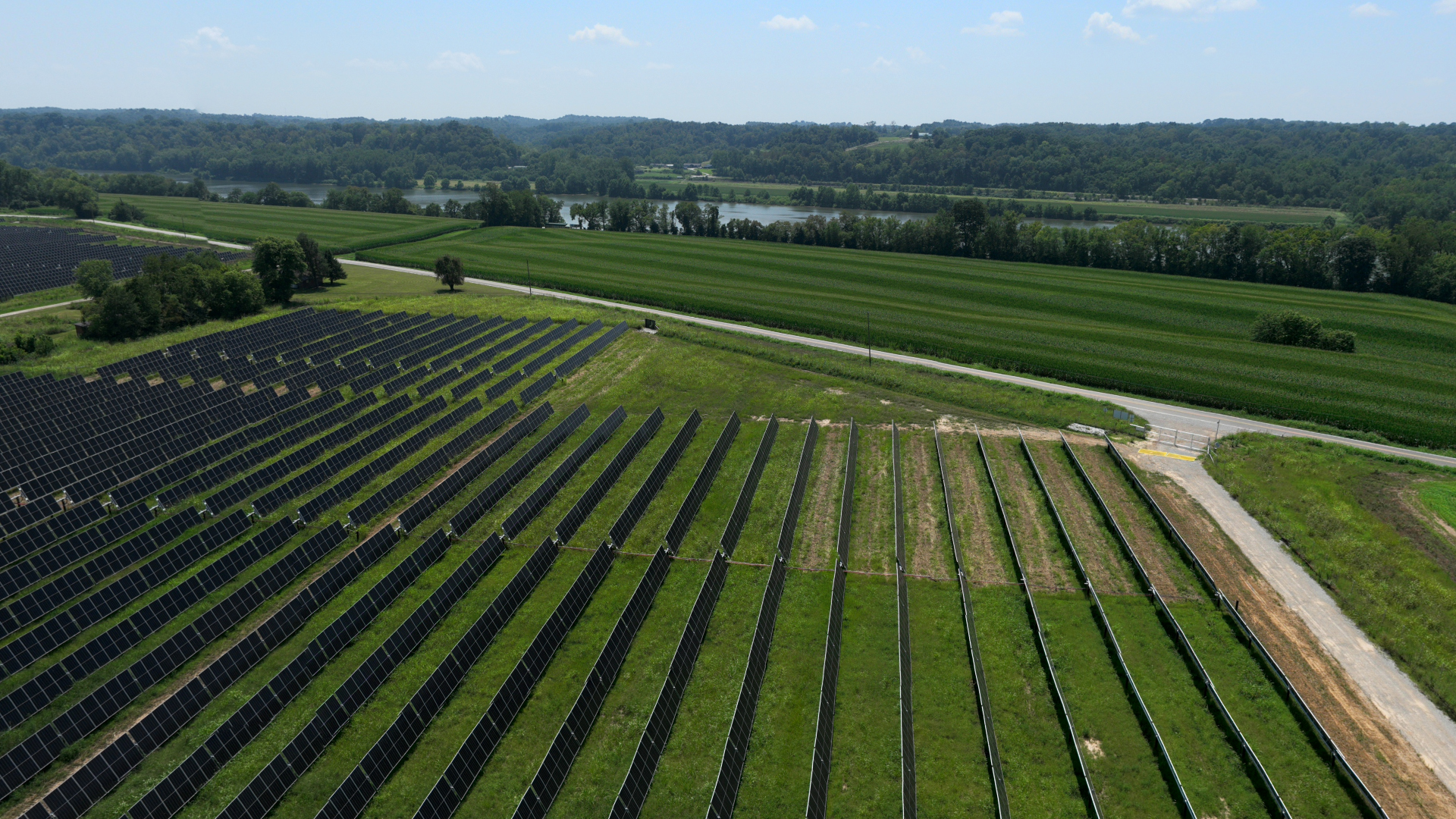
A $100 million solar project just completed funding in Ohio — and it’s already under construction
Doral Renewables just closed the final piece of financing for its Great Bend Solar project in Meigs County, Ohio. The announcement came on March 19, 2026, and the numbers behind it tell a story worth paying attention to. More than $100 million in combined debt, tax equity, and tax credit transactions have been finalised, the project is already under construction, and when it is complete it will power more than 9,000 American homes while sending over $400,000 in new tax revenue to one of Ohio’s smaller rural counties every single year.
This is what the clean energy transition looks like when the financing actually works.
Breaking down what $100 million in solar financing actually involves
Most people see a solar project announcement and assume a single company wrote a cheque. The reality of utility-scale solar financing is considerably more complex, and understanding it reveals why this milestone matters beyond the headline numbers.
Fifth Third Bank provided tax equity financing and finalised what is called Substantial Completion funding, bringing total tax equity investment to more than $27 million. Separately, $35 million in investment tax credits generated by the project were sold to a third-party buyer through a mechanism created by the Inflation Reduction Act that allows clean energy tax credits to be transferred to companies that can use them. More than $38 million in construction debt was repaid. Approximately $33 million in long-term debt was issued through HSBC and KeyBank. HSBC also provided an $8 million letter of credit facility to support ongoing operations.
Each of these transactions closing successfully and in sequence is what makes Great Bend fully funded. It is not a simple process, and completing it is a genuine operational achievement.
Why Meigs County is the right place to pay attention to
Meigs County sits in southeastern Ohio, a region that has historically depended on coal and fossil fuel industries. Like many rural Appalachian communities, it has faced decades of economic transition as traditional energy industries have contracted. A solar project delivering $400,000 annually in new county tax revenue is not a trivial contribution to a community of this size. That money funds schools, roads, emergency services, and local government operations in a county where the tax base has been under pressure for years.
According to the Lawrence Berkeley National Laboratory, utility-scale solar projects generate significant local economic benefits through property tax payments, landowner lease income, and construction employment, with rural counties in particular benefiting disproportionately relative to their existing tax base. Great Bend fits that pattern precisely.
The Solar Energy Industries Association has highlighted Ohio as one of the fastest-growing utility-scale solar markets in the Midwest, driven by strong grid infrastructure, available land, and a regulatory environment increasingly supportive of renewable development. Doral Renewables is clearly treating Ohio as a priority market within its broader 18-state portfolio.
The financing structure reveals something important about solar investment confidence
The participation of Fifth Third Bank, HSBC, and KeyBank in a single rural Ohio solar project is not accidental. These are not institutions that take speculative positions on unproven technology or developers without a track record. The fact that all three committed capital to Great Bend reflects genuine institutional confidence in both the project and in Doral Renewables as a platform.
Doral’s portfolio context makes that confidence understandable. The company operates nearly 450 megawatts of solar capacity across 18 states, with 1,500 megawatts currently under construction and a development pipeline approaching 18 gigawatts. Its global partners include APG, one of the largest pension funds in the world, and Apollo Funds, a major alternative asset manager. That is serious institutional backing for a developer that has demonstrated the ability to take projects from development through construction and into operation.
The tax credit transfer mechanism used in this deal is also worth noting. The Inflation Reduction Act created the ability for clean energy developers to sell investment tax credits directly to third-party buyers, opening up a much larger pool of capital for projects like Great Bend. According to BloombergNEF, the transferable tax credit market has rapidly become one of the most significant sources of clean energy financing in the United States, with billions of dollars in credits transacted since the mechanism became available. Great Bend’s $35 million tax credit sale is a direct example of that market functioning as intended.
What this means for the communities and investors watching Doral’s next moves
Great Bend is a single project, but it is also a proof of concept. A utility-scale solar project in rural Ohio, financed through a sophisticated multi-party capital structure, delivered on time and with full funding secured is exactly the kind of execution track record that makes future project financing easier and cheaper to arrange.
For Meigs County, the project represents a new, long-term revenue stream that will outlast the construction phase by decades. For Doral Renewables, it is a milestone that strengthens the foundation for the 1,500 megawatts currently under construction across its portfolio.
Sources
- Lawrence Berkeley National Laboratory — Land-Based Wind and Solar Impacts
- Solar Energy Industries Association — Ohio Solar Market
- BloombergNEF — Clean Energy Research
- Doral Renewables — Official Press Release via PRNewswire
Editorial disclosure
This article is based on a press release issued by Doral Renewables LLC and has been independently rewritten and editorially expanded. It covers the completion of project financing for the Great Bend Solar project in Meigs County, Ohio. Market context is sourced from Lawrence Berkeley National Laboratory, the Solar Energy Industries Association, and BloombergNEF. Commentary reflects the author’s own assessment. The information provided on this website is for informational and educational purposes only. Our content is derived strictly from verified online sources to ensure accuracy and objectivity. This analysis does not constitute financial, investment, or professional advice. Readers are encouraged to consult with qualified professionals before making decisions based on this information. For more information, please see our full DISCLAIMER.