Executive Summary
The United States launched Operation Epic Fury on February 28, 2026. In the first 36 hours, US and Israeli forces fired more than 3,000 precision-guided munitions and interceptors. Iran responded with approximately 400 ballistic missiles and over 800 drones in the first two days. The exchange immediately raised a question that has become central to how analysts, policymakers, and investors are thinking about this conflict: does the United States have enough of the right things to sustain this war, and if not, how quickly can it get them?
The answer is that the US has sufficient mid-grade inventory to sustain operations for weeks. The constraints are at the high end: precision interceptors, heavy rare earth processing, and the industrial capacity to replenish both. These are not problems that money alone can solve in the timeframe that matters. They are structural, they have been building for years, and the conflict has made them visible in a way that peacetime budgeting never quite managed. Markets recognized this within hours of the opening bell on March 2. Defence stocks, domestic energy producers, and rare earth companies surged. Airlines, cruise operators, and Gulf-dependent industries fell. The full market picture is covered in the companion piece. What follows here is the strategic picture underneath those moves.
The Basic Problem With Fighting a Modern War
People tend to think about military strength in terms of platforms. How many aircraft carriers the US has. How many fighter jets. How many missile batteries. Those numbers matter, but they are not the binding constraint in a sustained conflict. The binding constraint is what it takes to keep those platforms armed, fueled, and operational over weeks and months of active combat.
Modern weapons are not simple objects. A Tomahawk cruise missile is produced by a single manufacturer. It contains guidance components that require rare earth magnets, a propulsion system built from specialized alloys, and software running on chips manufactured largely in Taiwan. Building one takes months. Replacing a thousand takes longer. The US military went through more than 3,000 precision-guided munitions and interceptors in the first 36 hours of Operation Epic Fury, according to analysis by the Payne Institute at the Colorado School of Mines.
General Dan Caine, Chairman of the Joint Chiefs of Staff, reportedly told President Trump before the strikes that ammunition stockpiles could be a limiting factor in an extended campaign. Trump publicly dismissed those concerns, writing that US munitions stockpiles had never been higher. He also acknowledged, in the same statement, that at the highest end the US is not where it wants to be. Both things can be true simultaneously. The US has large inventories of mid-grade munitions. It has genuine constraints on its highest-performing precision interceptors. And behind both of those near-term questions sits a deeper set of structural vulnerabilities that will not resolve themselves once the current conflict ends.
Securing America’s Skies: The Complex Challenge of Drone Defense in an Era of Rapid Innovation: A Warning & Opportunity
On the day before the strikes began, the US Department of Defense quietly issued a request to mining companies asking how fast they could develop domestic sources of tungsten and 12 other critical minerals. That request, reported by S&P Global on March 4, tells you something about how the planning community understood the supply chain picture going into the conflict.
The Six Dependencies
The following table summarizes the six critical supply chain dimensions this series will examine. The urgency ratings reflect the current conflict, not a hypothetical future scenario.
| Supply Chain | Urgency | Key Vulnerability | Why No Quick Fix Exists |
| Precision munitions and interceptors | Immediate. War is active now. | 3,000+ guided munitions used in first 36 hours. THAAD and Patriot PAC-3 interceptors flagged as critical by the Heritage Foundation as recently as January 2026. | Single-manufacturer dependencies. Production lead times of 9 to 18 months. Quadrupling THAAD output takes years, not weeks. |
| Rare earths and critical minerals | Immediate and structural. | China controls 90%+ of heavy rare earth processing. 78% of US weapons programs contain rare earth magnet components. DoD issued an emergency minerals sourcing request the day before strikes began. | Processing capacity takes years to build. Mining alone is not enough. Separation, refining, and alloying are the bottleneck, and the US has almost none of that capacity outside of a handful of early-stage facilities. |
| Military jet fuel and energy logistics | Immediate. Operating costs rising daily. | US military is the world’s largest single institutional fuel consumer. Gulf basing infrastructure disrupted. Ras Tanura struck. Qatar fuel production offline. | Fuel cannot be easily sourced or routed around a closed strait on short notice. Pre-positioned reserves provide a buffer. They are not unlimited. |
| Semiconductors | Medium-term. Critical if conflict spreads. | TSMC manufactures approximately 90% of advanced chips used in US weapons guidance systems. A Taiwan conflict would disrupt this supply chain simultaneously with any Pacific escalation. | Domestic fabrication under the CHIPS Act is years from reaching meaningful scale. Existing weapons inventory contains chips already. New production is the constraint. |
| Shipbuilding and naval sustainment | Medium-term. Constraint grows with duration. | The US has approximately seven active major naval shipyards. China has approximately 13. The US Navy carries a maintenance backlog that has grown consistently for years. | Shipyards cannot be built quickly. The workforce pipeline is measured in decades. Ships waiting for drydock availability wait months. |
| Antimony, gallium, and tungsten | Immediate. Emergency request issued February 27. | 85% of US antimony imported. Near-100% of gallium from China. Tungsten dominance held by China. All three are critical for active munitions production right now. | These are not common metals with multiple supplier nations. Developing alternative supply takes years of permitting, construction, and qualification. There is no spot market substitute. |
Sources: Payne Institute at Colorado School of Mines via Foreign Policy (munitions figure); S&P Global Platts (antimony, gallium import dependency; DoD emergency sourcing request); Heritage Foundation January 2026 readiness report (interceptor inventory assessment); Investor Ideas / DoD data (78% of weapons programs, 90%+ heavy rare earth processing from China); Reuters (tungsten sourcing request).
Munitions: The Immediate Problem
The munitions situation is the most visible and time-sensitive of the six dependencies. Iran fired approximately 400 ballistic missiles and more than 800 drones in the first two days of the conflict. Each intercept requires an interceptor missile. Each interceptor costs between one million and twelve million dollars depending on the system. Each takes months to manufacture, test, and certify before it can be deployed.
There are nine active THAAD batteries worldwide. Each battery contains 48 interceptors. The Heritage Foundation’s January 2026 military readiness report, published six weeks before Operation Epic Fury launched, found that US vertical launch system inventories are insufficient for even one full fleet reload and that high-end interceptors including SM-3, SM-6, Patriot PAC-3 MSE, and THAAD would likely be exhausted within days of sustained high-intensity combat. The Iran conflict is consuming the same inventory of high-end interceptors that would be needed to deter China in the Pacific.
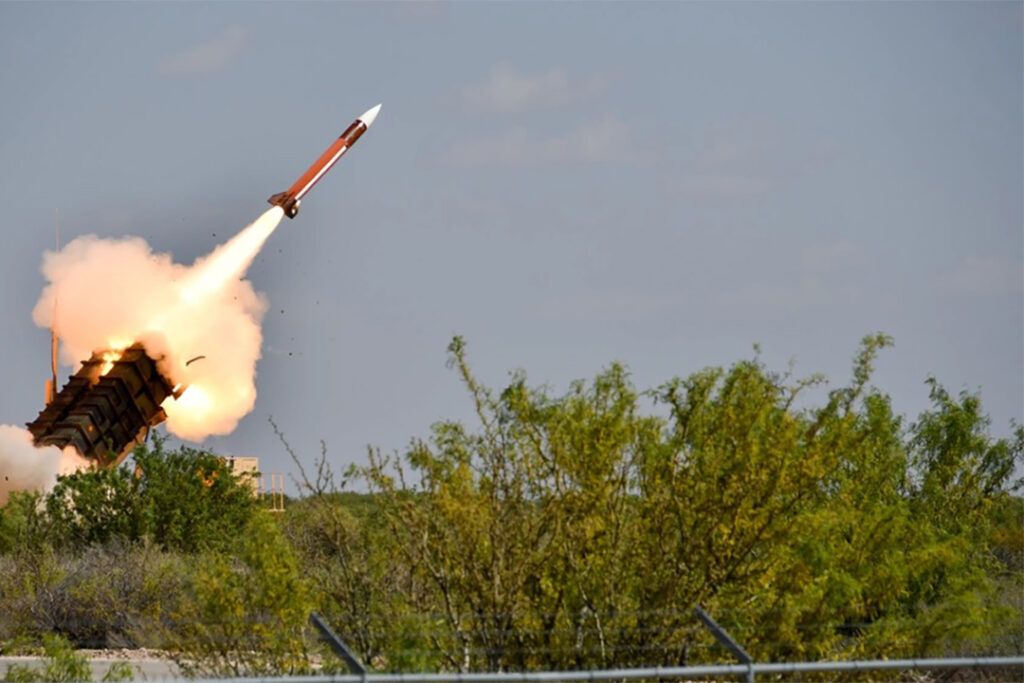
The Pentagon signed a framework agreement with Lockheed Martin in January 2026 to quadruple THAAD production from 96 to 400 interceptors per year. It announced a parallel agreement with L3Harris to expand missile propulsion output. Both decisions were correct. Both will take years to have an effect. The war started six weeks after those announcements were made.
Ryan Brobst, Deputy Director of the Center on Military and Political Power at the Foundation for Defense of Democracies, stated the strategic implication plainly. His concern is not whether the US has enough munitions to fight Iran. It is about the day after, and whether the US can deter China once the Gulf inventory has been drawn down.
Rare Earths and Critical Minerals: The Structural Problem
The munitions stockpile is a solvable problem. Given enough money and enough time, production can be increased. The rare earth problem is different in kind. It is structural, it has been building for decades, and there is no meaningful short-term fix.
Rare earth elements are 17 metals with unusual magnetic and electronic properties. They are used in the guidance systems, electric motors, radar components, and communications equipment in nearly every major US weapons platform. The Department of Defense estimates that approximately 78% of US weapons programs contain components that depend on rare earth magnets. An F-35 fighter jet requires approximately 900 pounds of rare earth materials. A Virginia-class submarine requires approximately 9,200 pounds. A DDG-51 destroyer requires approximately 5,200 pounds.
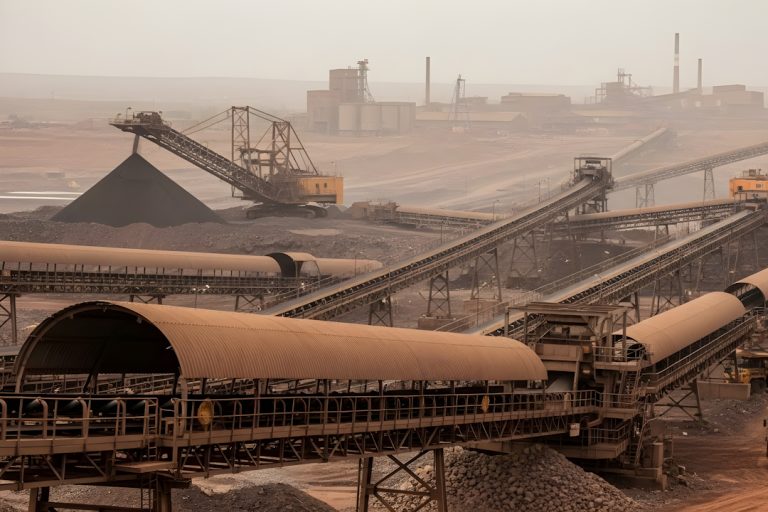
China controls roughly 60% of global rare earth mining and more than 90% of global rare earth processing. The processing step is the critical one. Separating, refining, and converting rare earth oxides into the high-purity metals used in weapons-grade magnets requires specialized chemistry, significant capital investment, and years of operational experience. China has all three. The United States is building that capability from nearly nothing.
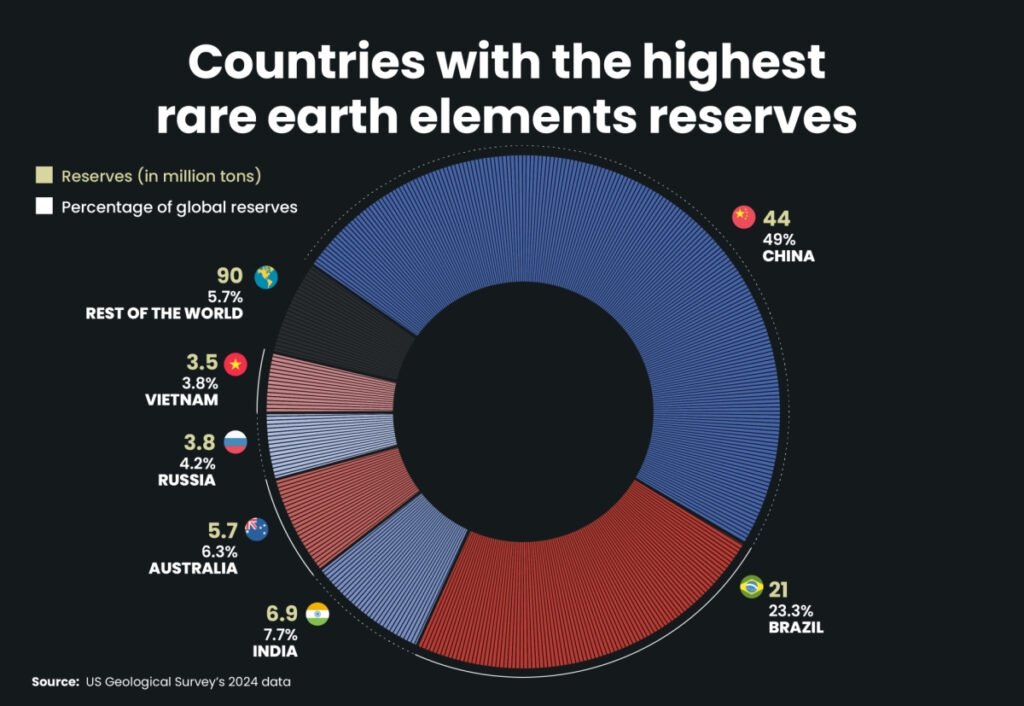
China introduced export control licensing for rare earth elements and magnets in late 2024, restricting shipments of dysprosium, terbium, and other heavy rare earths essential for high-temperature-stable magnets used in military applications. The legal framework for restricting exports is in place. The US is fighting a war while its primary strategic competitor holds a legal veto over the materials needed to replenish its weapons. Article 3 of this series will cover the rare earth supply chain in full, including the domestic companies working to change that picture and what realistic production timelines look like.
Fuel and Energy Logistics: The Operational Problem
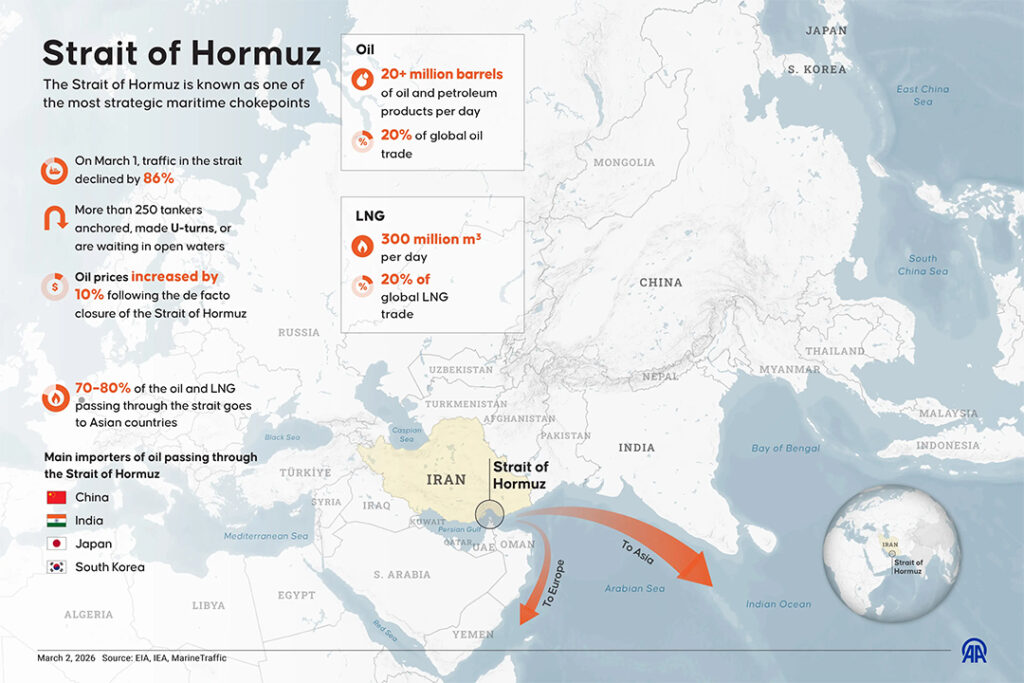
The US military is the single largest institutional consumer of petroleum in the world. It uses approximately 85 million barrels per year under normal operating conditions. Active combat increases that figure significantly. The Strait of Hormuz, through which roughly 20% of global seaborne oil moves under normal conditions, is effectively closed. Insurance withdrawal did what physical force has not yet achieved: the Joint Maritime Information Center reported on March 6 that commercial transits had dropped to single-digit levels in the previous 24 hours. On a normal day, approximately 138 vessels pass through.
US military bases in Bahrain, Qatar, Kuwait, and the UAE depend on regional fuel infrastructure that has been disrupted. Ras Tanura, the largest refinery in Saudi Arabia and a key regional distribution point, was struck by Iranian drones. Qatar’s fuel and gas production is offline. The US military has pre-positioned reserves and its own logistics capabilities that provide meaningful insulation from short-term commercial disruptions. Those reserves are not unlimited, and every day of active operations draws them down.
Iran announced on March 5 that it would keep the strait closed only to ships from the US, Israel, and their Western allies. That announcement placed China in a strategically privileged position. Chinese-flagged vessels retain transit rights. Russia benefits from the disruption because Middle Eastern barrels off the market give Asian buyers stronger incentives to increase Russian crude intake. The energy logistics problem is simultaneously a military operational problem and a geopolitical one.
Semiconductors: The Medium-Term Problem
Modern precision weapons are guided computers. A JDAM guidance kit converts an unguided bomb into a precision munition using GPS and contains semiconductor chips. So does the seeker head in a Patriot interceptor, the navigation system in a Tomahawk, and the radar processor in a fighter jet. The supply chain for those chips runs primarily through Taiwan Semiconductor Manufacturing Company, which manufactures approximately 90% of the world’s most advanced semiconductors.
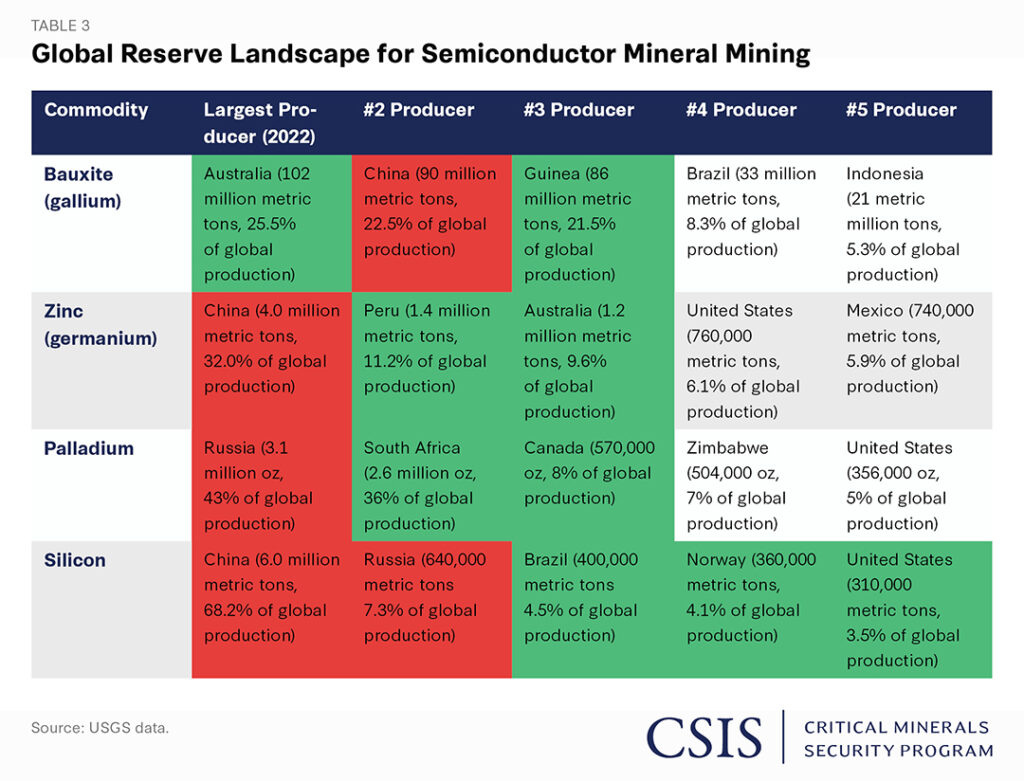
The semiconductor dependency does not create an immediate problem in the current conflict. Chips already in the US weapons inventory are there. The problem is about replacement. If a conflict over Taiwan were to disrupt TSMC operations while the US was simultaneously engaged in the Gulf, the ability to manufacture replacement precision guidance systems would be severely constrained. The speed with which the US moved to escalate the Iran campaign in its first week may partly reflect this calculation. A prolonged Gulf campaign depletes the high-end inventory needed to deter China, and China controls the supply chain for the materials needed to replenish it.
Shipbuilding and Naval Sustainment: The Long-Term Problem
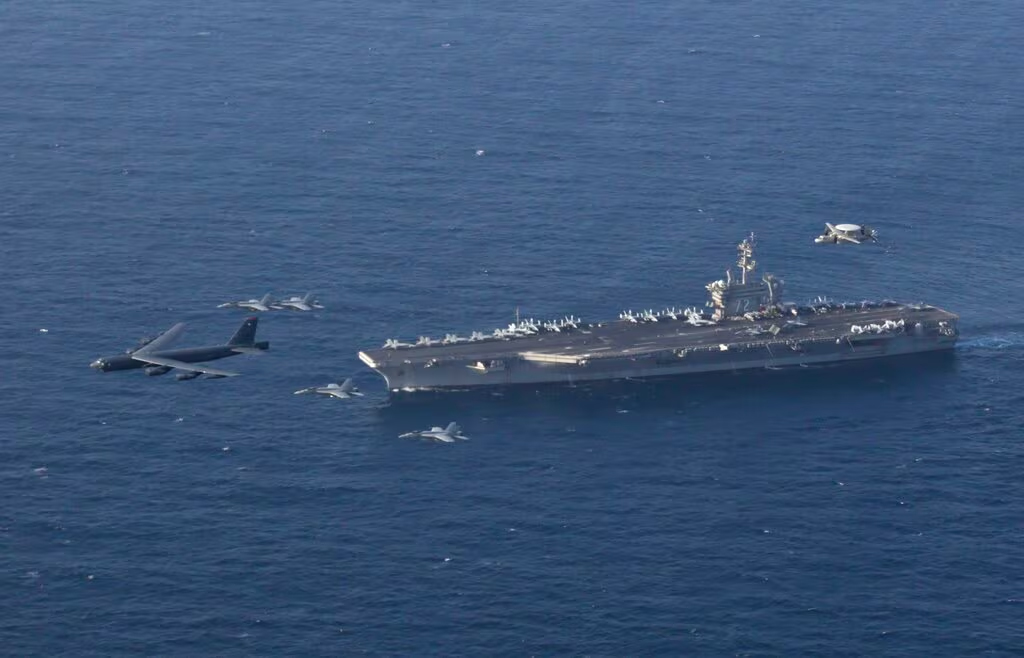
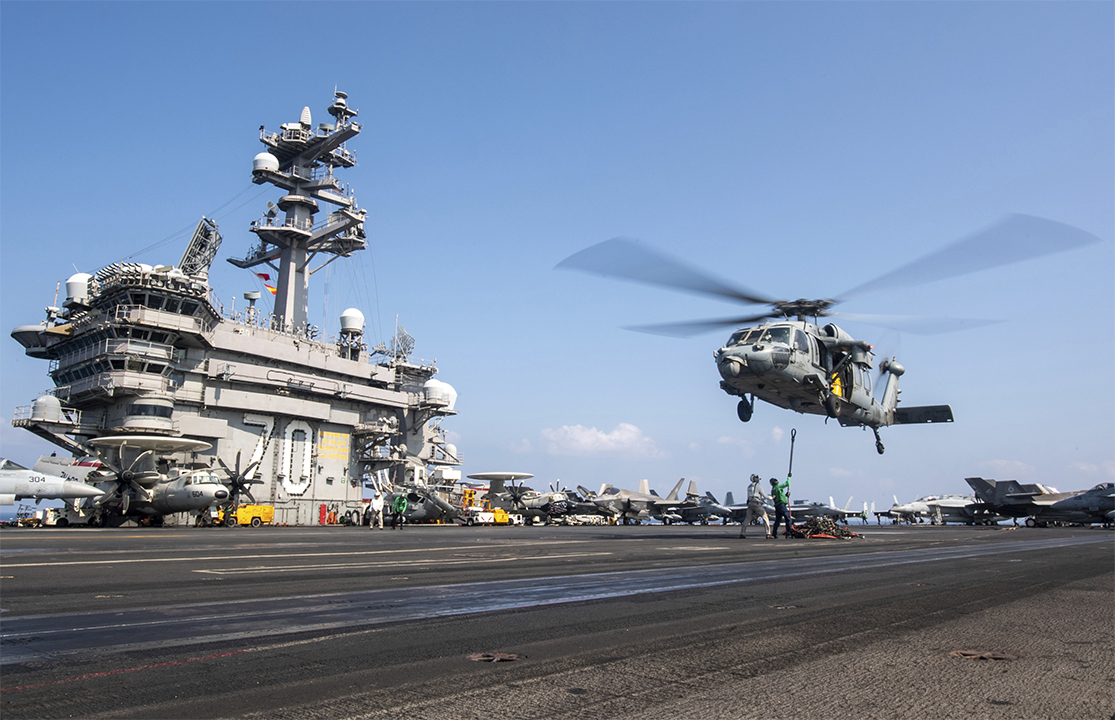
The United States Navy operates 11 aircraft carriers, the largest carrier fleet in the world. It also operates a shipbuilding and maintenance industrial base that has declined significantly relative to the size of the fleet it is asked to support. The US has approximately seven active major naval shipyards. China has approximately 13, with combined output that some analysts estimate exceeds US capacity by more than 200 times on a tonnage basis.

In the context of the current conflict, this manifests as a sustainment problem rather than a production one. Carrier strike groups operating in the Gulf require continuous logistics support and rotating maintenance windows. Iranian strikes have complicated port access in parts of the Gulf. Extending a carrier group’s deployment beyond its standard rotation means either accepting higher maintenance risk or finding alternative port access. Both carry costs that compound over time. The Heritage Foundation’s January 2026 readiness report cited shipbuilding capacity as one of the most serious structural weaknesses in US military preparedness.
How the Pieces Connect
These six dependencies are not independent problems. They interact in ways that amplify the overall vulnerability. Rare earth shortages limit the rate at which precision guidance components can be manufactured, which limits the rate at which munitions stockpiles can be replenished, which limits how long the US can sustain high-intensity operations. Semiconductor constraints limit the ability to manufacture replacement weapons electronics. Shipbuilding backlogs limit how quickly additional naval assets can be deployed. Fuel disruptions raise the cost of every operation being conducted right now.
The conflict has also made a strategic interdependency visible that existed before the first missile was fired. The US is fighting a war in which the materials needed to replenish its weapons are sourced, processed, or manufactured in countries that are either adversaries or adversary-aligned. That is not a problem that can be solved during the conflict. It is a problem that the conflict has accelerated the pressure to solve after it ends.
Sources
- Payne Institute: Munitions Expenditure Analysis of Operation Epic Fury
- S&P Global: US DoD Emergency Critical Mineral Sourcing Request March 2026
- Heritage Foundation: 2026 Index of US Military Strength and Readiness Report
- Joint Maritime Information Center: Strait of Hormuz Commercial Transit Data March 2026
- Reuters: US Department of War Tungsten and Antimony Sourcing Framework
Editorial Disclosure
This report is for informational and educational purposes only. This article includes subjective analysis and expert commentary from the writer. It is based on verified press releases and corporate announcements. It is not intended to provide financial, investment, or legal advice. All reporting is based on verified online sources as of March 9, 2026. Please read our full Disclaimer.