
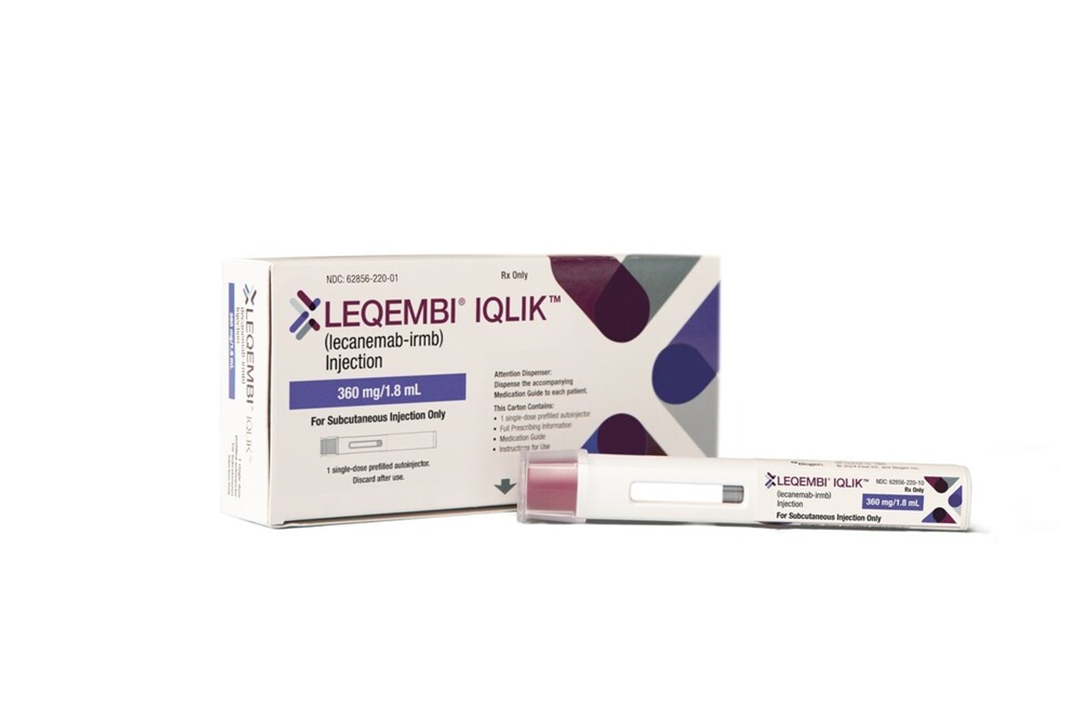
Eisai (TYO: 4523) and Biogen (Nasdaq: BIIB) announced that the FDA has accepted a review for their new subcutaneous (under-the-skin) version of LEQEMBI, called LEQEMBI IQLIK, for people with early Alzheimer’s disease. The FDA has given it Priority Review, with a decision expected by May 24, 2026.
If approved, this version would be the first anti-Alzheimer’s drug that patients can inject at home instead of going to a clinic for IV treatments every two weeks. Each injection takes about 15 seconds, and patients would start with a 500 mg weekly dose. This could make treatment much easier and reduce the need for hospital visits.
How It Works
LEQEMBI targets the harmful proteins in Alzheimer’s disease, called amyloid beta protofibrils and plaques, which damage brain cells and contribute to memory loss. By attacking both, the drug may help slow the progression of the disease.
Clinical studies show that the weekly subcutaneous version works just as well as the IV version, and the side effects are similar. Less than 2% of patients had serious injection-related problems.
Why This Matters for Investors
- Bigger Market: Being able to inject the drug at home could make it easier for more patients to start treatment.
- Higher Revenue Potential: Easier access may increase the number of people using LEQEMBI, boosting sales for Eisai and Biogen (BIIB).
- Lower Costs: Fewer clinic visits means lower costs for healthcare providers and better margins for the companies.
- Confidence in Pipeline: Approval would show that Eisai and Biogen are leading the fight against Alzheimer’s, supporting investor confidence.
Safety Notes
LEQEMBI has a warning for amyloid-related brain swelling and small bleeds (ARIA). Most patients don’t have serious problems, but people with certain genetic traits, called ApoE ε4 homozygotes, are at higher risk. Doctors monitor patients with MRI scans during the first few months. Other side effects may include headache, nausea, rash, or mild injection reactions.
Bottom Line
If approved, LEQEMBI IQLIK could make Alzheimer’s treatment much more convenient, potentially helping more patients while increasing revenue for Eisai and Biogen. This move strengthens their position in the growing Alzheimer’s therapy market and offers a clear opportunity for investors to watch.